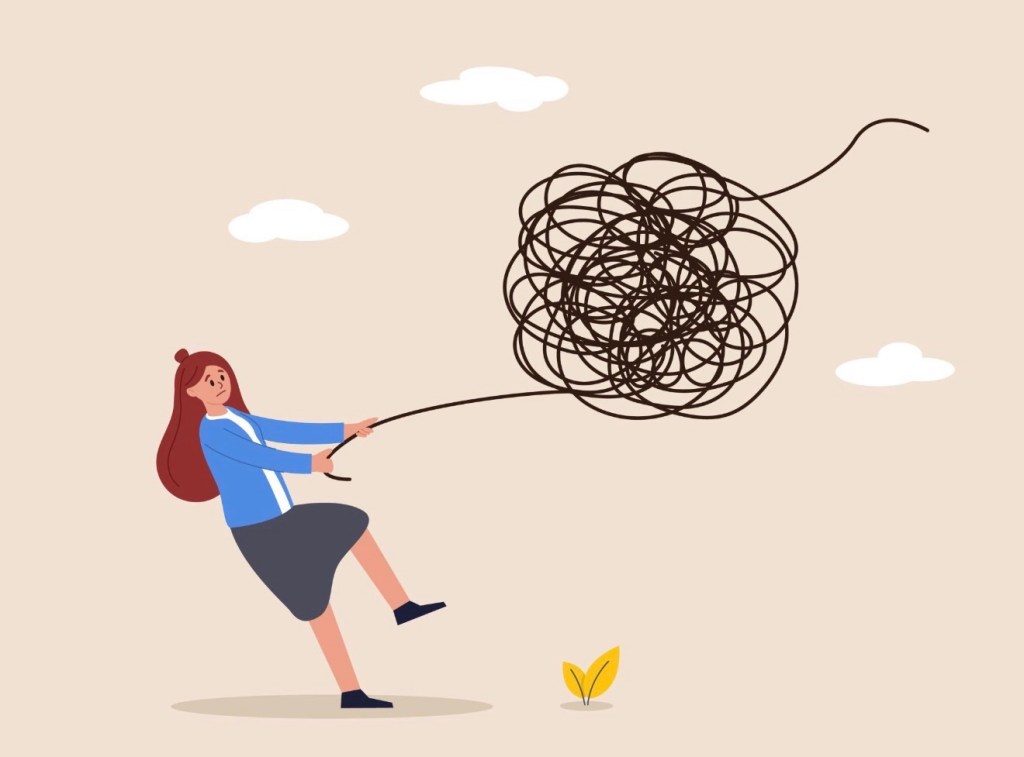

Five years later, the universe apparently decided to check whether I’d actually learned anything.
Five years ago, shortly after my father died, one of my sisters sent an extraordinarily long message to our family telling each of us, in considerable detail, exactly what she thought was wrong with us. I wrote about it here on Doing Life Differently at the time.
Back then, I was working with my psychologist on challenging some of my core beliefs. One of the things I wrote was that another person’s words “literally have no power unless I give them the power to affect me.” I understood that intellectually. I’m not entirely sure I knew how to do it yet.
Fast-forward five years.
About five weeks ago, my 46-year-old brother, Shane, died suddenly following an epileptic seizure. His death did something I wasn’t expecting. It switched my family back on. For close to a decade, various members of my family have existed at varying degrees of estrangement from one another. Some relationships were completely severed. Others existed through the occasional message. Some of us hadn’t been in the same room for years.
Then somebody dies. Suddenly everyone is talking. Police. Morgues. Cremation. Money. Belongings. Funeral notices. Ashes. Dad’s old property. Who gets what. Who pays for what. Who should have done what. Who loved whom. Who abandoned whom. Who suffered most. And apparently, eventually:
Who I, Stacey really is.
Because my older sister of eleven months, Celine, recently sent me an awfully long text. Six screenshots long.
Celine struggles with empathy and has what I experience as an incredibly powerful victim narrative. When she is hurt, it can become very difficult for her to see a conflict outside the framework of what has been done to her. There are mental-health explanations that have been suggested over the years for some of these patterns, but ultimately, the label isn’t actually important to this story. The behaviour is. And according to Celine’s message, I have quite a lot to answer for.
Apparently, she has financially, emotionally and mentally supported me whenever the chips were down. I have treated her terribly. I accused her of the worst possible thing at the worst possible time. I am controlling.
Mum and I treated Dad and Shane “like mules.” Celine now “cops the destruction.” Mum and I kicked Shane to the kerb. Celine was expected to organise everything and pay for everything after Shane died. I haven’t appreciated her. I’ve chosen Mum over her. I’m selfish. I’m greedy. I’m a liar. I think I know everything. And apparently my words mean nothing because my actions reveal my truth.
It was quite the character reference. And once upon a time? A message like that would have absolutely destroyed me. This time I did something different.
I wrote an answer. A ridiculously long answer.
I went through almost every accusation. And then I realised something.
The answer wasn’t really for Celine.
It was for me.
So I went through the accusations one by one
This is something my autistic brain does extraordinarily well. Give me chaos and eventually I’ll create categories.
Give me contradictions and I’ll construct a timeline. Give me six screenshots of emotional accusations and apparently I’ll conduct an internal Royal Commission.
So let’s start with:
“I supported you financially, emotionally and mentally whenever the chips were down.”
Okay. Let’s look. We moved out of home together as teenagers. Did Celine support me then? Probably. We were two very young women trying to navigate adulthood after growing up in the same dysfunctional family. My early twenties? Maybe. But no more than the close friends I had around me at the time. My late twenties? No. I married. Celine didn’t attend the wedding. My early-to-mid thirties? No. And that was actually a period when I was silently living inside a marriage I would eventually understand very differently.
My late thirties? Maybe. That’s when I gave birth to J. Celine was around, certainly, but we weren’t exactly close. Then came my forties. Multiple sclerosis. Autism.
J’s autism journey. Separation. Family Court. Disability.
The NDIS. Rebuilding an entire life. Celine wasn’t the person who carried me through those things. I was.
There were psychologists. Friends. Professionals. Eventually support systems. But Celine really only came closely back into our lives after J and I returned to Toowoomba. Realistically, our closer relationship belongs mostly to the last four years.
And suddenly I could see something important.
Celine might genuinely remember herself as the sister who has always been there for me. That doesn’t mean she’s deliberately lying. But her autobiographical narrative isn’t automatically mine.
Someone remembering themselves as your rescuer doesn’t mean you remember being rescued. This might be one of the strangest things I’ve learned about families. We all appear in each other’s autobiographies.
But apparently we’re not always playing the same character.
In Celine’s story, perhaps she’s the big sister who repeatedly rescued Stacey. In mine, Celine was sometimes present. Sometimes helpful. Sometimes extraordinarily generous. Sometimes difficult. Sometimes distant. And sometimes absent.
I don’t need to erase the good things she’s done to acknowledge the times she wasn’t there. And this is important:
I can say “Yes, you helped me” without agreeing “Therefore you built me.”
I can appreciate something someone did for me twenty years ago without owing them lifelong compliance.
Gratitude isn’t indenture.
“You accused me of the worst possible thing at the worst possible time.” This one was easier.
I didn’t invent an accusation about Celine. I challenged something she actually did. There was a financial arrangement between us. Celine made a unilateral decision about money that I had not agreed to. I objected. That’s it. Now, was the timing spectacularly awful? Absolutely. Our brother had just died. Celine was grieving. So was I. She was overwhelmed. So was I. But someone’s distress about my boundary doesn’t automatically make the boundary abusive. That’s something Stacey-five-years-ago really struggled with.
Stacey-now understands:
I can understand why somebody did something without agreeing that they were entitled to do it.
Both can exist.
“You and Mum treated Dad and Shane like mules and I cop the destruction.”
I sat with this sentence for quite a while. Because genuinely: What does that mean? I think Celine is describing a much bigger emotional story in which she believes Dad and Shane carried burdens created by other family members, and now that they’re dead, she has inherited the consequences. Except… I didn’t create Celine’s relationship with Dad. I didn’t create Celine’s relationship with Shane. I didn’t create Kelly’s relationship with Celine. Or Melanie’s. Or Mum’s.
I am not responsible for what other adults have done to her. I am responsible for my relationship with Celine.
That’s it. Understanding the family system doesn’t make me responsible for the family system.
“You and Mum kicked Shane to the kerb.”
This one could have hurt. Because Shane is dead.
And dead people create enormous opportunities for guilt. There will never be another phone call. Never another argument. Never another reconciliation. Never another opportunity to change the ending. Approximately five years ago, I asked Shane not to contact me. There were behaviours affecting J and me that I was no longer willing to accept. So I established a boundary. And interestingly? Shane accepted it. When he died, Shane apparently still carried a photograph of the five siblings in his wallet. That matters to me.
It tells me that despite everything that happened, he still considered us his family. But his death doesn’t require me to rewrite our relationship. I can wish things had been different. I can miss him. I can laugh at memories of him. I can make his funeral booklet. I can stand at his service. I can tell J stories about her uncle.
And simultaneously say: The boundary I made five years ago was the right decision for J and me at the time.
Grief doesn’t require historical revisionism. And Celine’s relationship with Shane was different from mine. She has told me Shane put her through hell. I believe that was her experience. But that doesn’t somehow make me responsible for it.
Then there was Shane’s funeral. According to Celine, Mum expected her to organise everything and pay for everything. My memory is considerably different.
There were opportunities to share responsibility. There were other people willing to make decisions. Kelly pushed at various points to take responsibility. At another point, Mum appeared to hand administration to me. And Celine repeatedly stepped back into the centre.
Even when I produced a draft service booklet, Celine sent me another version explaining essentially how it “needed” to look.
And here’s the thing: That’s okay. Taking charge isn’t inherently bad. Celine is the oldest. Organisation may be part of how she manages crisis. If being involved gave her a sense of purpose while her brother was lying in a morgue hundreds of kilometres away, I can understand that. What I can’t reconcile is:
“Nobody would take responsibility, so I had to do everything.”
existing beside:
“When other people tried to take responsibility, I struggled to let their decisions stand.”
Those stories don’t comfortably coexist. You can’t insist on holding the steering wheel and simultaneously complain that nobody else would drive.
And then money entered the grief. This is where things became particularly messy. There were costs associated with Shane’s funeral. There were conversations about how they would be covered. I offered an alternative that would have taken considerably longer. Celine and Mum didn’t want to wait. So arrangements were made. I contributed substantially. Kelly and Melanie contributed too.
And later, Celine made a decision involving money that I hadn’t agreed to. That’s where our current argument actually started. Not because I don’t care that Celine is struggling. Not because I’m greedy. Not because I’m controlling. Not because I don’t understand grief.
Because: You don’t get to change a financial agreement involving me without talking to me first.
That’s not a psychiatric diagnosis. It’s not an attack on her character. It’s a boundary.
The precise financial details aren’t particularly relevant to this story. What matters is what happened afterwards.
One disagreement became evidence for an entire lifetime of alleged wrongdoing. And suddenly we weren’t talking about money anymore. We were talking about Dad. Shane. Mum. Tara. Old relationships. Children. Divorces. Funerals. Trauma. Things that happened decades ago. Apparently every unresolved family grievance had been invited to the meeting.
Then there is Tara. Dad left a property to Shane and Melanie in his will. Celine has an enormous emotional attachment to that property. She talks about wanting to “go home.” And actually? I understand that. Home is powerful. Childhood places carry extraordinary emotional meaning. I genuinely hope that at some point Celine and her son can find an arrangement that allows them to spend meaningful time around Tara in a way that works for them.
But here’s another thing I’ve learned:
Wanting something desperately doesn’t create entitlement to it.
I don’t own that property. I don’t control it. I don’t have a financial interest in it. I can’t give Celine permission to live there. I can’t negotiate on Melanie’s behalf. I can’t resolve that situation. Five years ago, that might have made me feel guilty. Now I can simply say: That isn’t mine.
Not:
I don’t care.
Not:
You’re wrong for wanting it.
Just:
I don’t have authority here. This belongs to somebody else to resolve.
“You chose Mum.” Apparently my recent contact with Mum proves something too. Except there hasn’t been some magical mother-daughter reconciliation. My brother died. Our mother lost her only son. We had contact. And now we’re essentially back to the distance that worked before. Celine was actually the family member I had the most contact with before Shane died.
And this is another thing I’m learning: My relationship with Mum belongs to Mum and me. Celine’s feelings about my relationship with Mum belong to Celine. I don’t need to alter one relationship to regulate another person’s feelings about it. Another item returned to its owner.
“Your words are just words. Your actions are the truth.” This was probably my favourite accusation.
Because actually? I agree. Look at my actions. I left an abusive marriage. I protected J. I changed my name. I sought an autism diagnosis. I sought psychological help.
I learned about trauma. I confronted dissociation. I built disability supports around myself. I fought systems that didn’t understand me. I’ve spent years in therapy. I’ve learned boundaries. I’ve learned to apologise. I’ve learned that being dysregulated doesn’t give me permission to hurt everybody around me. And I’ve learned that somebody else’s dysregulation doesn’t require me to surrender either.
I have spent years asking myself: What part of this belongs to me? So yes. Look at my actions. They’re imperfect. Occasionally spectacularly imperfect. But they’re mine.
And yes, I have a filter. Celine criticised this too.
She’s right. I do. I’ve always had one. I think about how my words might land. I don’t always get it right. Sometimes I don’t get it remotely right. But I care about the effect my presence has on other people. Somewhere along the way, “having no filter” seems to have become synonymous with authenticity. I disagree.
Sometimes a filter is empathy. Sometimes it’s maturity.
Sometimes it’s recognising: I could say the cruellest thing currently occurring to me, but what would that accomplish? That’s not being fake. That’s choosing what sort of person I want to be.
“You think you know everything.” Oh God, no.
If anything, years of psychology have taught me how spectacularly little I know. But I know myself better.
That’s different. I’m autistic. Pattern recognition is one of the ways I understand the world. I notice contradictions. I connect events. I pull things apart. Sometimes I get those patterns right. Sometimes I don’t. And I’m increasingly comfortable saying: I don’t know. But there is one thing I do have authority over. My own experience. Celine can tell me how she experienced an event. I can listen. I can consider it. I can even change my understanding because of what she tells me.
But she doesn’t get to overwrite my experience with hers.
Then came the really interesting part. After writing thousands of words answering Celine’s accusations, I realised something. I wasn’t desperately trying to convince myself that I was a good person. I knew who I was. Not “good” in some simplistic saint-versus-villain sense.Just…me. There were things in Celine’s message I could accept. Yes, she has helped me. Yes, I’m sure there have been times I’ve hurt her. Yes, our family is spectacularly dysfunctional. Yes, I’ve ended relationships with family members. Yes, I can be rigid. Yes, I can be incredibly direct. Yes, my autistic brain occasionally misses implied communication that apparently everybody else received via some secret subscription service. Yes, I’ve made mistakes. And none of that frightened me. Because I no longer need to be innocent of every accusation in order to believe I’m worthy. And I think that might be the healing.
Five years ago, Stacey needed a verdict. This is where autism and trauma make an interesting little cocktail. When somebody misunderstood me, I desperately needed to correct it. Facts mattered.
Timelines mattered. Words mattered. Intent mattered.
If I could just explain myself clearly enough… If I could produce enough evidence… If I could show the chronology… Surely eventually everybody would arrive at the objectively correct version of events. Except families aren’t courts. There is no judge. Nobody hands down findings. And sometimes the other person isn’t looking for accuracy anyway. They’re expressing pain.
Five-years-ago Stacey heard: “You’re selfish.”
And immediately responded: Evidence please.
Current Stacey can hear:
“You’re selfish.”
And think:
That’s how you currently experience me.
Those sentences are worlds apart.
Reflection doesn’t mean accepting the accusation.
This may be the biggest thing I’ve learned from this whole experience. Self-reflection isn’t: Somebody accused me of something, therefore there must be truth in it. Nor is it: Somebody accused me of something, therefore they’re toxic and everything they said is bullshit. Reflection is much more uncomfortable.
Could this be true?
What evidence supports it?
What evidence contradicts it?
What part did I play?
Is there something here I need to change?
Do I owe somebody an apology?
Is this actually about me?
What belongs to the other person?
And finally:
What am I going to do with what I’ve learned?
I can take responsibility without taking all responsibility.
That’s new.
Five weeks ago, Shane died. And occasionally I think we’ve all forgotten that underneath everything else. Celine lost a brother. So did I. So did Kelly. So did Melanie. Mum lost her only son. J and the other children lost an uncle. Friends lost a mate. People around the Gemfields lost somebody they knew. Nobody owns the grief. Nobody wins because they suffered most. Celine is carrying things. I’m carrying things. Kelly and Melanie are carrying things. Mum is carrying things. And life has had the audacity to continue happening around all of us.
Celine recently had her purse stolen. That sucks.
Meanwhile, I’ve managed to break my dominant hand and am wandering around in a cast. Also sucks. We don’t need to rank them. We’re all carrying something.
Doing Life Differently. Five years ago, shortly after Dad died, I wrote about receiving an enormous family message and learning that somebody else’s words have no power unless I give them that power. At the time, I think I desperately wanted that to be true. Five years later, Shane dies. Family contact explodes back into existence. Celine sends me six screenshots explaining who she believes I am. And apparently the universe has gone:
Righto, Stacey. Let’s see if you actually learned anything.
For the record, I don’t genuinely believe the universe is sitting around thinking: Stacey seems a little too emotionally regulated this week. Somebody get Celine a phone. But bloody hell, sometimes the timing is impressive. I read her message. I got angry. I questioned it. I wrote an enormous response addressing almost every accusation. And writing it mattered. I needed to lay her version beside mine. Line by line. Is this true? Is this mine? Is there something here I need to own? Is there something here I need to repair? Or is this somebody else’s pain being handed to me as an identity? Some things were mine. I kept those. Some weren’t. I put those down. And then I realised something that five-years-ago Stacey couldn’t quite do.
I don’t need Celine to agree with my conclusions.
I don’t need her to understand me. I don’t need an apology. I don’t need Kelly or Melanie or Mum to adjudicate. I don’t need the family to vote on whose version of events is correct. I don’t even need to send the bloody response. I needed to write it. That’s different. I can acknowledge Celine’s pain without accepting responsibility for all of it. I can appreciate everything she has done for me without owing her lifelong compliance. I can remember Shane honestly and still grieve him enormously. I can recognise Mum’s humanity without needing her to become my mother again. I can understand my family without fixing it.
And I can allow somebody I love to hold a version of me that I don’t recognise.
Because Celine’s story about Stacey belongs to Celine.
My job isn’t to wrestle it out of her hands and rewrite it. My job is to look at myself honestly. Take responsibility for what is mine. Repair what genuinely needs repairing. Learn what needs learning. And leave everything else where it belongs.
Maybe that’s what Doing Life Differently looks like five years later. Not winning. Not proving. Not being universally understood. Just knowing myself well enough that somebody else’s story about me no longer becomes my identity. And perhaps the universe didn’t send this along to test my resolve at all. Perhaps life just happened. Perhaps Celine is hurting. Perhaps I’m hurting. Perhaps two sisters can experience the same relationship completely differently without either one possessing the definitive history of it. And perhaps healing isn’t reaching the point where none of this affects me.
Perhaps healing is being affected — and not being destroyed. Then putting down the phone. Taking some pain relief. And having a bloody rest. Because my hand is broken. And I’ve finally learned that I don’t have to carry everybody else’s shit as well. 😁